
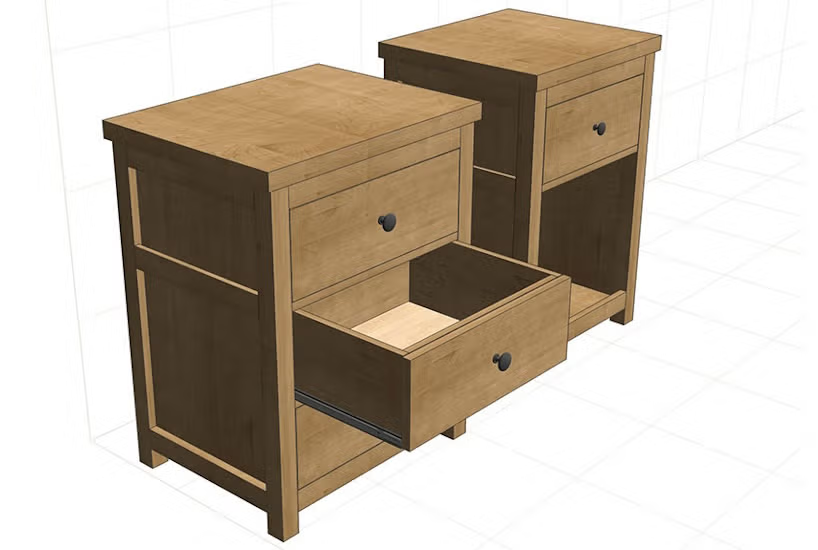
When it comes to furnishing your home, nightstands and living room end tables play a crucial role in both functionality and aesthetics. These small pieces of furniture not only provide a surface for lamps, books, and decorative items but also contribute to the overall style of your space. With Pro100, a powerful 3D modeling software, you can effortlessly design custom nightstands and end tables that perfectly suit your preferences and complement your interior design.
Understanding the Basics
Before diving into the design process using Pro100, it's essential to grasp the fundamental principles of designing nightstands and end tables. Here are a few key considerations:
Height:
The ideal height of a nightstand should be approximately the same as the top of your mattress or slightly higher (2-4 inches). This allows for easy access to items from your bed without straining. Similarly, for living room end tables, aim for a height that falls just below the seat's arm. However, opting for a slightly taller end table can create a more modern look and prevent it from getting lost among other furniture pieces.
Width:
The width of your nightstand or end table should be proportional to the bed or sofa it accompanies. While there's some flexibility here, aim for a size that doesn't overpower the surrounding furniture or appear too small in comparison.
Style:
Choose a design that complements the overall style of your room. Whether you prefer a sleek and minimalist look or a more ornate and traditional aesthetic, ensure that your nightstand or end table design aligns with the existing decor.
{modal image="images/intro-nightstand-design.jpg#joomlaImage://local-images/intro-nightstand-design.jpg?width=347&height=233"}Nightstand Design{/modal}